You walked into the room and have completely forgotten why you are in the room. Completely forgotten, or struggling to remember the name of the person who just introduced himself to you? Or encounter other scenarios similar to these, then you are at the right place. If all this is happening to you, then you are not alone. Almost every person is dealing with the same issue. The human brain is constantly getting about 11 million bits of information every second. But typically handled data is about 40 bits of the conscious mind. These things create a fascinating challenge. So how do we train our minds to capture and retain the information that matters most immediately?
The answer to all these questions is hidden in the understanding of the process, which is how it actually works, and by leveraging the proven memorization techniques, the ability to learn and recall information can be transformed. No matter if you are a student preparing for the exams or a professional learning new skills, or the one who wants to remember what they want to. After going through the 11 memorization methods, you may extend your approach to learning.
Understanding Your Memory: The Foundation for Fast Learning
There are some techniques that articulate the memory of humans. Suppose the memory system of the human is like filling the cabinet with three main compartments: the sensory memory, short-term memory, and long-term memory. The sensory memory holds the information for milliseconds, short-term memory lasts only about 15-30 seconds, and long-term memory is potentially permanent storage.
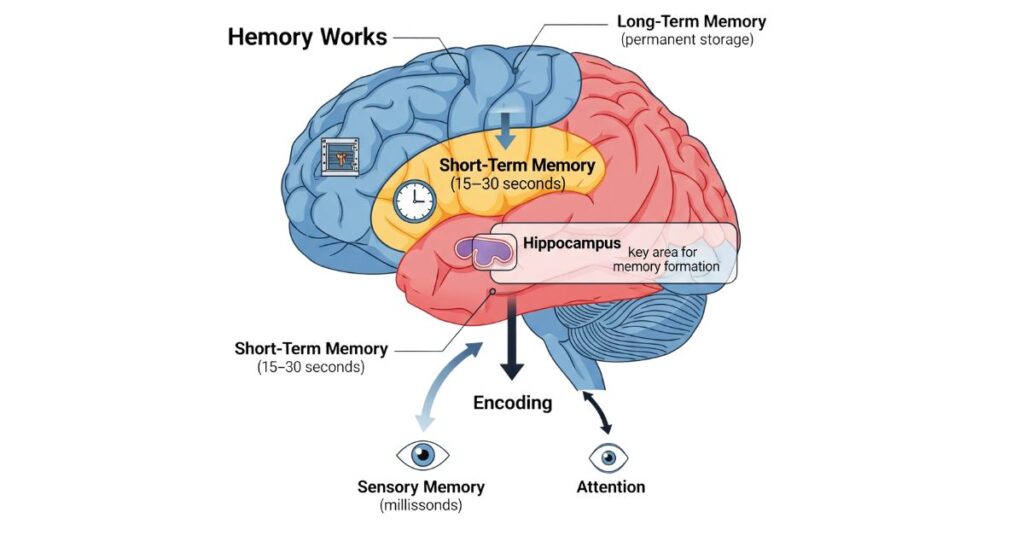
Moving the information from the short term to the long term is the key which is called encoding. This is the stage where the memorization techniques become more powerful tools that help us to create stronger neural pathways and more vivid memories that play a part in resisting forgetfulness.
1. Acronyms and Acrostics: The Building Blocks of Quick Recall
In memorizing things, Mnemonic devices like acronyms and acrostics work by creating memorable connections between the pattern of the brain and information that is already recognized. The example of the acronym is when you try to memorise the National Aeronautics and Space Administration, you can remember the acronym of that is NASA. Like this, when you transform anything into acrostics, this helps you to memorize more easily, like “Richard Of York Gave Battle In Vain” into the colors of the rainbow, like (Red, Orange, Yellow, Green, Blue, Indigo, Violet). By doing this, you are trying to leverage the natural tendency of the brain to remember stories by familiar letter patterns already.
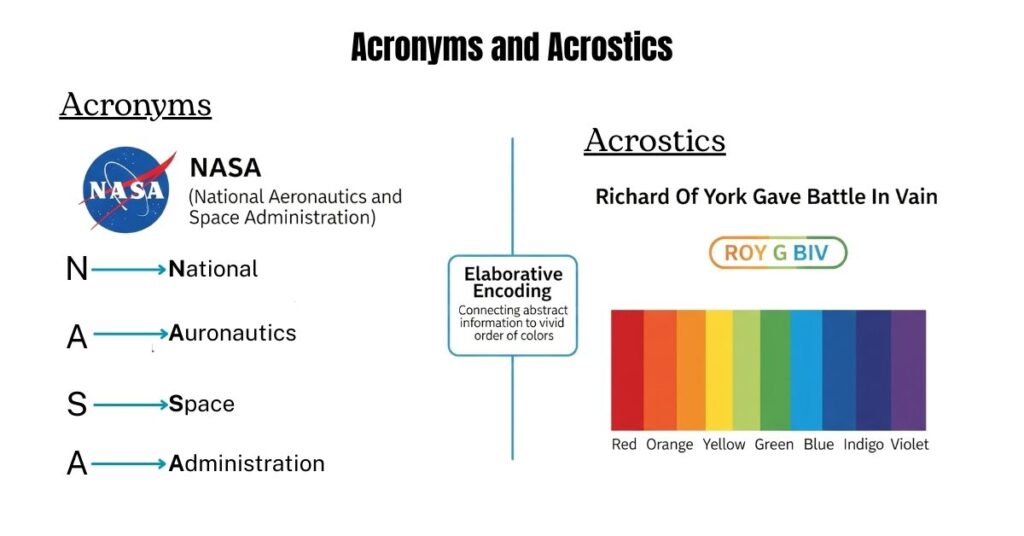
The cognitive scientist calls it the elaborative encoding process due to the effectiveness of this technique. This process helps the person connect the abstract information to the concrete and meaningful phrases, which creates the retrieval pathways in the brain.
Practical Application Strategy: Whenever you try to use this technique of acronyms and acrostics, choose the words that can evoke vivid mental images or personal connections. But instead of creating a random combination of letters, craft the different phrases that tell the story relating to the existing base of knowledge.
2. Musical Mnemonics: Harnessing the Power of Rhythm and Melody
Everyone’s brain has a great relationship with music; it operates at a fundamentally different level than the processing of regular text or speech. In the human body, the auditory cortex is the main part to process musical information by directly connecting to the hippocampus, the primary formation of the memory center. The partnership of the neurons explains why you easily and clearly recall the lyrics of the song, since it takes a long time to remember what you had for lunch yesterday.

Musical mnemonics transform dry information into memorable melodies, creating what researchers call “dual encoding.” The information gets stored both as verbal content and as musical patterns, dramatically increasing retention rates. Studies show that information paired with music can improve recall by up to 60% compared to traditional rote memorization methods.
Advanced Technique: Create rhythmic patterns even without full melodies. Clapping out syllables or speaking information in consistent rhythmic patterns can significantly enhance memorization speed and accuracy.
3. Rhyming Mnemonics: Creating Memorable Sound Patterns
For different patterns, the human demonstrates remarkable preferences, especially the patterns related to the auditory that follow the predictable structures. The cognitive bias is exploited by the rhyming mnemonics by embedding information within the previous rhythm in the brain or with the familiar sound patterns that feel natural to recall, as well as satisfying.
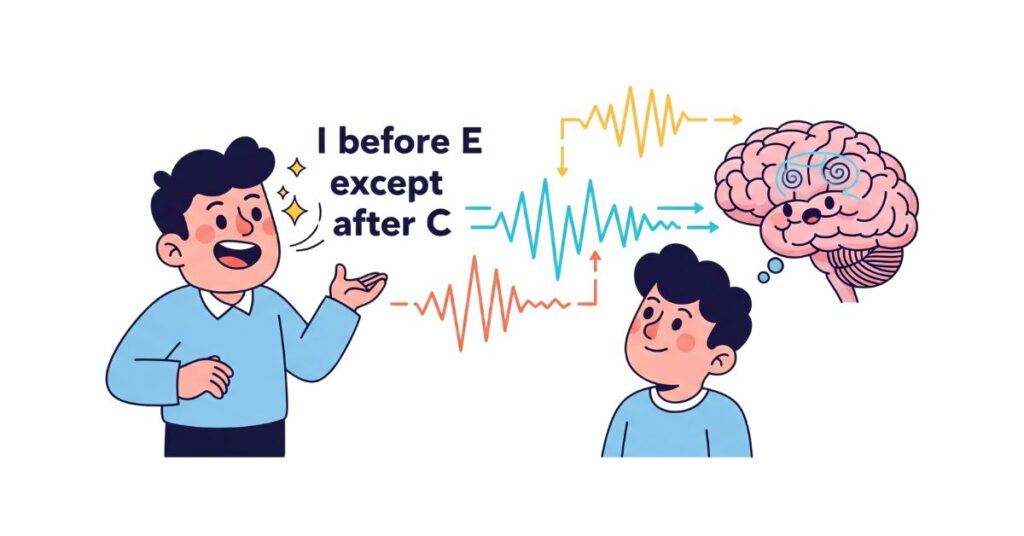
“I before E except after C” is a classic rule that helped millions of English speakers navigate the spelling challenges for generations. This is called the Phonological Encoding by the linguists; your brain processes the rhythmic patterns alongside the factual content and then stores it by creating multiple retrieval cues.
Creative Enhancement Strategy: In case of not emerging natural rhymes, you should focus on alliteration, syllable patterns, or near rhymes. The goal of all this is to create the auditory experience that makes the information stick in the mind and is much more memorable.
4. Chunking: Organizing Information for Optimal Processing
Chunking is the most fundamental principle of cognitive psychology and the formation of memory. Simultaneously, the working memory typically holds about seven pieces of information, a limitation that was discovered by the psychologist George Miller in his famous research. Chunking allows the memorizer to bypass the limitation by grouping the smaller elements into larger and meaningful units.
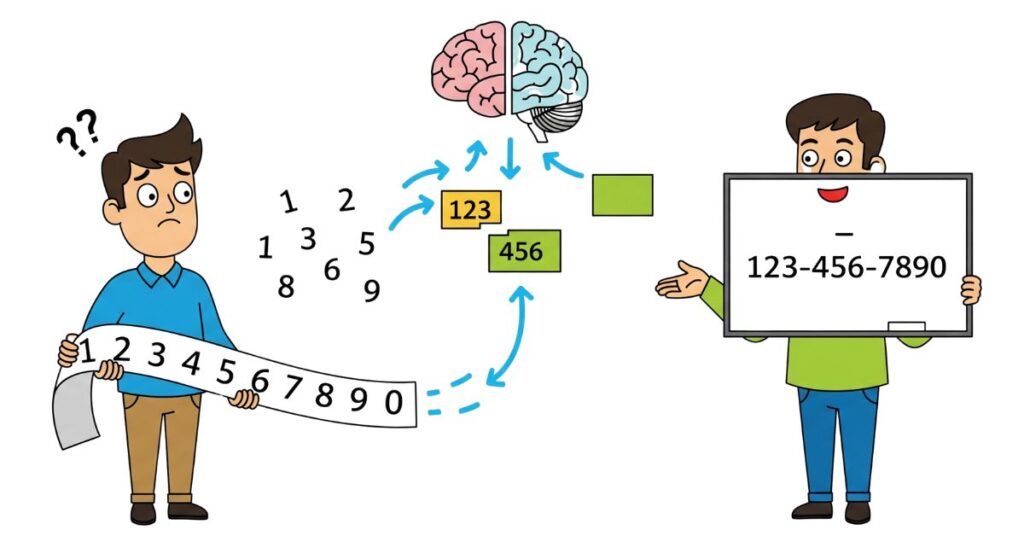
The simple example of Chunking can be the memorising of phone numbers. Instead of memorising your phone number in separate digits, you automatically combine all the numbers into chunks. This strategy reduces the cognitive load when creating the logical relationship between the pieces of information.
Strategic Implementation: In complex identification of the information, apply Chunking for natural grouping, categorizing, and making hierarchical relationships. In the memorization of the vocabulary of the foreign language, the words should be memorized by themes, phonetics, grammatical patterns, and many other similarities, rather than trying to learn by isolated terms.
5. The Memory Palace: Spatial Memory’s Ultimate Technique
There is another method of memorising things that is known as the Method of Loci. This method, commonly called the technique of memory palace, provides the most power to memorization; it is the most powerful strategy ever developed. The ancient orators, including the Roman and Ancient Greek, used this technique to deliver the hours-long speeches without notes. However, the modern champions known for memorizing apply this method to the entire deck of cards within two minutes.
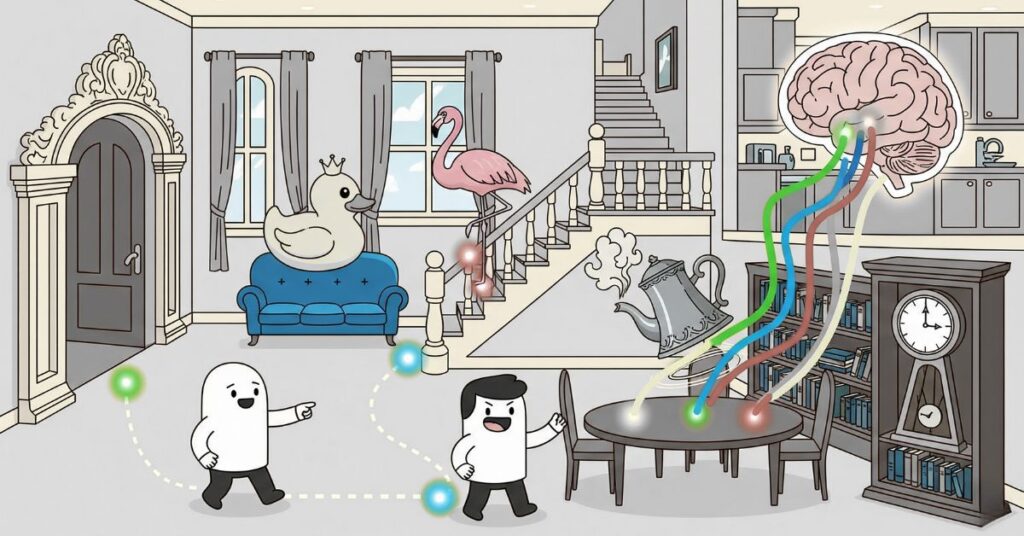
This technique makes use of the brain’s exceptional memory capabilities. Humans evolved as egocentric creatures by navigating complex three-dimensional environments for cover and survival. Hippocampus, the part of the brain, contains some specialized places for the cells and grid cells that are helpful in creating the mental maps of the millions of similar locations. This technique of memory hijacks the spatial processing system for storing information.
Step-by-Step Construction Process: Begin by selecting a location you know intimately—your childhood home, daily commute route, or favorite restaurant. Mentally walk through this space, identifying specific, memorable locations where you’ll “place” information. The key function lies in creating vivid, with interactive scenes where the information you’re memorizing interacts with these familiar locations.
For maximum effectiveness, make these mental images bizarre, emotionally engaging, or humorous. Your brain prefers to remember unusual or emotionally significant events, a phenomenon psychologists call the “von Restorff effect” or isolation effect.
6. The Power of Handwriting: Engaging Your Motor Memory
In this digital world, keypad typing has reduced the hand activities that were the simple act of writing. Handwriting activates the unique neural networks that enhance retention and memory formation. Motor memory is engaged when we start to write by hand instead of typing on a keyboard. Handwriting helps in visual processing and cognitive planning, and researchers named this term “embodied learning.”
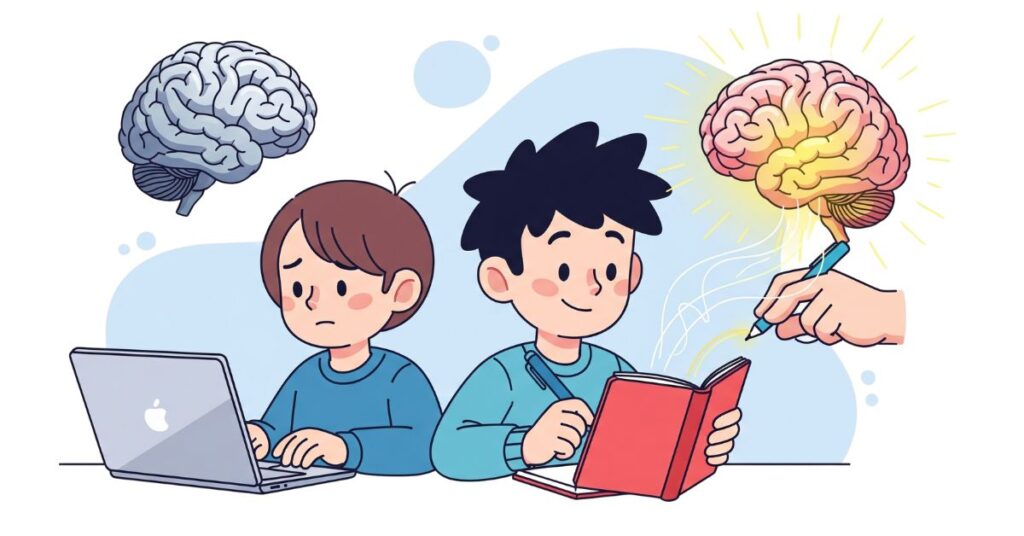
According to Berninger, a neurologist, research and demonstrated that handwriting plays an important role in activating the regions of the brain that are language, thinking, and force more than typing. Writing by hand helps the memory traces through the cortex activation, giving the brain multiple ways to restore the information.
Optimization Strategy: For an active processing technique, the handwriting should be combined; instead of copying information, the verbatim rephrases the content in different words. This approach strengthens the encoding process when building a deeper understanding.
7. Spaced Repetition: Optimizing Memory Consolidation
The forgetting curve, characteristic of human memory, is exploited by spaced repetition is exploited. A German psychologist discovered that humans forget the information over time, with the steepest occurrence of decline within the 24 hours from the initial learning.
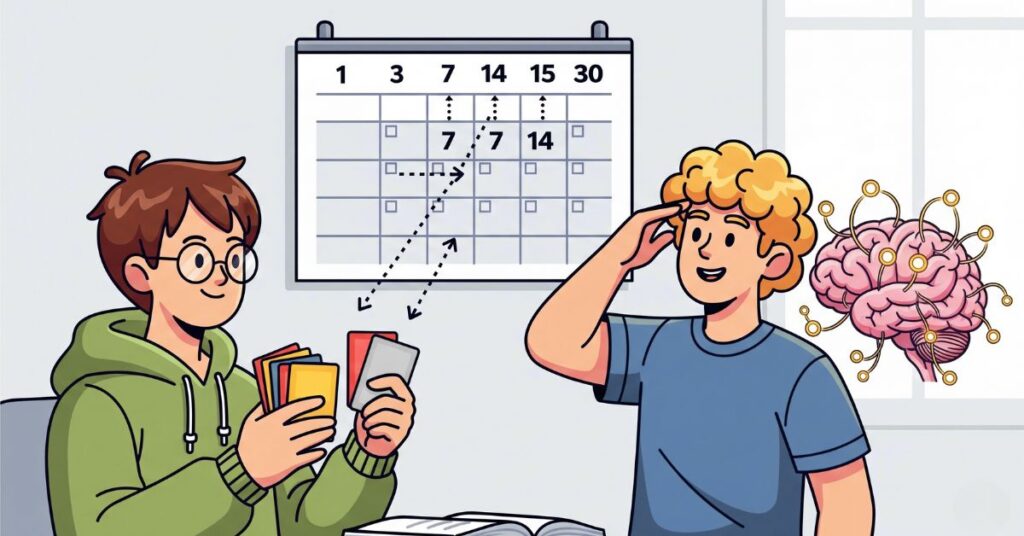
You slow down the forgetting process and practice to strengthen the memory trace while you recall the information. This process of repeating the information by reviewing the sessions before you are likely to forget.
Scientific Implementation: The optimal spacing intervals typically follow an expanding pattern: review after one day, then three days, then one week, then two weeks, then one month. Modern spaced repetition software like Anki or Quizlet can automate this scheduling, but understanding the underlying principle allows you to apply the technique to any learning situation.
8. Visual Connections: Transforming Abstract Information into Memorable Images
In the human processing system, the visual system represents the most sophisticated information processing networks. The human brain allocates the neural tissues to visual processing more than any other sense. The visual memory remains in the brain for a longer duration than the abstract or verbal memories.
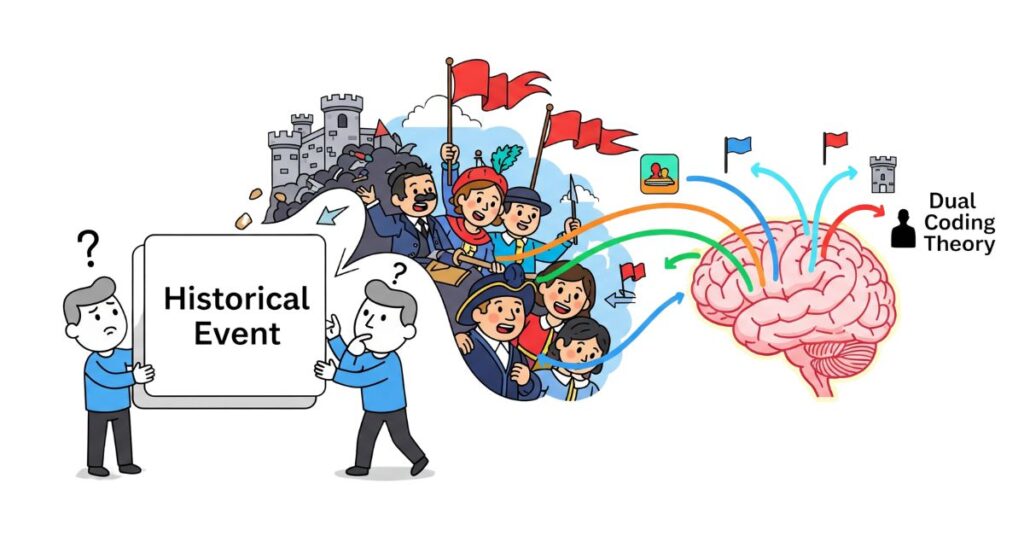
The visual techniques work very transformative, transforming the abstract information into concrete, memorable images. The process of conversion is called the dual coding theory, in which the information is encoded both visually and verbally by creating stronger and more accessible traces than the one-channel encoded information.
Advanced Visualization Strategies: Interactive mental images and creation of dynamic images happen rather than static pictures. When you visualize the historical events in vivid detail with complete sounds, colors, and with emotional reaction, you can memorize the list of historical events easily. The more sensory details you include, the more retrieval pathways you create.
9. Teaching and Sharing: The Protégé Effect in Action
The explanation of the information to others activates the multiple cognitive processes that are helpful in enhancing retention and understanding. The brain automatically organizes information more systematically when you prepare to teach something, identify the knowledge gaps, and create clearer models in the brain.
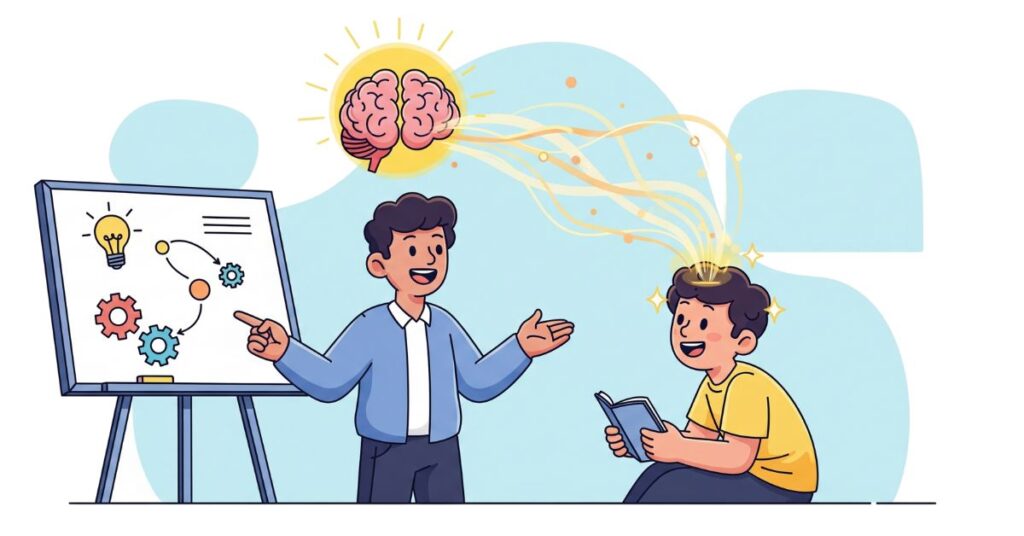
People learn more effectively when they are interested or expecting to teach the given material to someone else, as demonstrated by the Protégé Effect. The process of information from initial learning encourages deeper engagement and more understanding.
Implementation Framework: If you are not a teacher or don’t have an audience, you can also practice using imaginary students. Suppose you are teaching the students and start to write the detailed explanations in your own words or create the step-by-step guides for complex procedures. In this way you can take advantage of the Protégé Effect.
10. Sleep Optimization: Consolidating Memories While You Rest
Memory of the brain can be optimized by proper sleep, which represents the passive rest of the brain. Sleep is the passive consolidation and neural recognition. Particularly during the slow wave phases, the brain transfers information from temporary storage into the long-term storage (hippocampus) in the neocortex.

According to the research of cognitive scientists, the deprivation of sleep can reduce the learning capacity of the brain by up to 40%. However, the strategic napping during or in the breaks of learning sessions can improve retention by 20-30%.
Strategic Sleep Applications: Time your most intensive memorization sessions for late afternoon or early evening, allowing overnight consolidation to strengthen these memories. If possible, review important information briefly before sleep, as this “final rehearsal” receives priority processing during memory consolidation.
11. Physical Exercise: Boosting Brain Function Through Movement
Physical movement of the brain function can be boosted through exercises; the structure of the brain directly supports the memory function and retention. During the exercise, the brain-derived neurotrophic factor (BDNF) promotes and boosts the growth of new connections (neural) and supports the existing health of neurons.
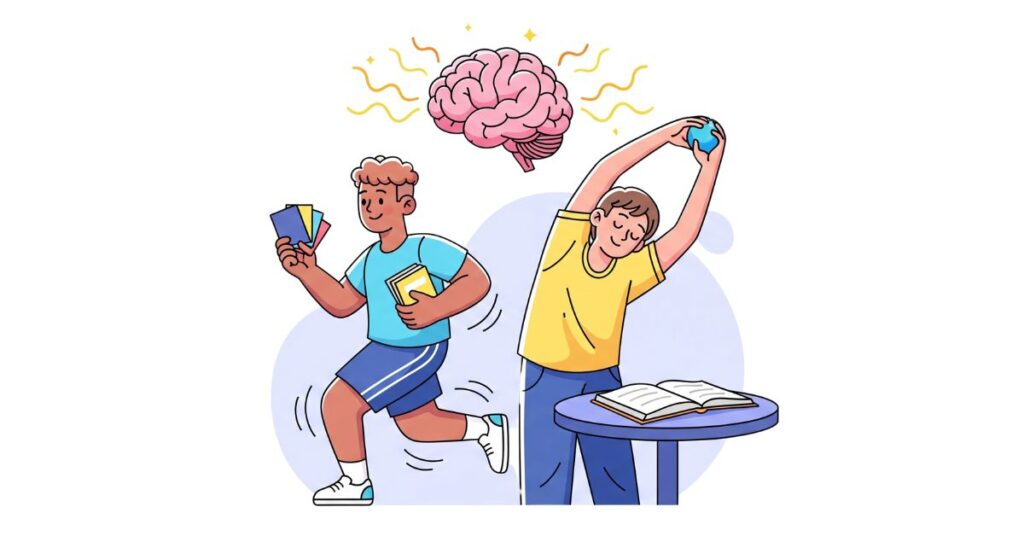
Particularly, cardiovascular exercise benefits the hippocampus; it is the primary memory formation center in the brain. According to the study by experts, 20 minutes of moderate exercise can improve information retention and recall performance before studying.
Exercise Integration Strategy: Incorporate light physical activity into your study routine. Walking while reviewing flashcards, doing jumping jacks between study sessions, or even fidgeting with a stress ball can enhance cognitive performance through increased blood flow and neurotransmitter activity.
Combining Techniques for Maximum Effectiveness
The combination of all the described techniques results in the most successful memorization strategies. For example, if you memorize something filled with the rhyming mnemonics while talking around the house, and plan to teach the information to a friend. In this scenario, you created the memory palace for the spatial technique, auditory, physical movement, and social reinforcements. This multimodal approach will create the encoding pathways for making memories under various conditions.
Think of it like building a strong foundation along with multiple beams of support rather than relying on a single element in the whole process.
Advanced Memory Strategies for Specific Situations
- For Academic Learning: For students trying to increase their memory for academic purposes, spaced repetition should be used in practice tests. Also, use the Feynman Technique by explaining the concepts in simple terms, as if you are teaching a child to fill the gaps in knowledge.
- For Professional Skills: If you are trying to increase this skill, you should try to create the procedural memory palaces and walk through complex work step by step. Combining this with regular practice can stimulate real-world cognition and the pressures of time.
- For Language Learning: Whether trying to learn the language or creating a memorable connection among foreign and similar concepts, it may help through spaced repetition and daily life conversations.
Troubleshooting Common Memory Challenges
If techniques after trying are not working effectively, then that means the problem lies in the engagement of the emotions or cognitive load. The brain of humans prioritises information from all the listens to or seen data that seems important, emotionally significant, or relevant. If someone finds the memorization mechanical, then they should try connecting the information with personal experiences, current self-challenges, and future aspirations.
When struggling to memorize the information, you should avoid the cognitive load by adding the sessions regular breaks of about 25-45 minutes. During the extended periods, the encoding efficiency declines. To avoid this error, the process should be shorter, and more frequent sessions to avoid the errors and make it far more effective.
The Science of Forgetting: Why Memory Techniques Work
For the person who is trying to increase their brain memory and the use of different techniques, the process is so effective. As humans, the memory system is designed to prevent cognitive overload by removing irrelevant or outdated information. If you forget things in daily life, then it is not a flaw; actually, it is a feature of the brain’s system.

All the memory techniques work by making the information seem more important and providing multiple retrieval pathways that resist the forgetting process. Consistently, when you use these strategies directly, you are training the brain how to treat specific information as high priority.
Building Your Personal Memorization System
For making the memorization more effective, there is more to know than individual techniques; effective memorization demands developing a personalized system that fits schedule, learning style, and goals. You should start by recognizing first which technique is suitable for your brain, which engages with the brain better, then gradually expand the toolkit and build confidence as being expert.
Suppose you are making a journal for memorization where you will track which technique works best with different information, you should note the study times, conditions, and progress over time should be noted. This cognitive awareness helps to refine the approach and maximize learning efficiency.
Conclusion: Transforming Your Relationship with Learning
Mastering these memorization techniques represents more than acquiring useful study skills only—it’s about fundamentally transforming the relationship with learning and information. When you can quickly and reliably memorize new information, you gain confidence to tackle more challenging subjects, explore new interests, and continuously expand your knowledge base throughout life.
To be an expert in memorization, one should be patient and consistent in practicing. Commencement should start with the suitability of the techniques, the natural way of learning, then gradually notice the challenging methods become easy with the skills developed. With the passage of time and hard work, you will be able to develop an intuitive sense that works best for numerous situations, acquiring a lifelong toolkit for learning.
Also Read: More Latest Informative Blogs
The simplest way to extend the memorization process is learning about the capacity of the brain and how the brain learns new things. By understanding how memory works and by applying the approved techniques, you not just memorise — you are trying to unlock the remarkable potential of the brain and long-term retention and rapid learning.
Are you ready to apply these techniques to memorization? Then you should start by selecting a method that seems more natural and resonates with you, and master additional techniques. Share your intention in comments, and also share this with others to build a community of learners.

Discover more from AlertsU.Com
Subscribe to get the latest posts sent to your email.