
Breaking into the software engineer job market in the United States can feel overwhelming, but it’s far from impossible. Every year, thousands of developers — from fresh graduates to international candidates seeking visa sponsorship — successfully land roles in the US tech industry. The difference between those who get hired and those who don’t usually comes down to strategy, not intelligence. Understanding how the US hiring system works, how recruiters screen resumes, and how interviews are structured can dramatically improve your chances of success.
Choosing Your Software Engineering Niche
After analyzing hundreds of US tech job descriptions and hiring patterns across major job boards, one pattern becomes clear: candidates who approach the US job market strategically — by specializing early, optimizing their resumes, and preparing deliberately for interviews — consistently outperform equally skilled engineers who apply randomly.
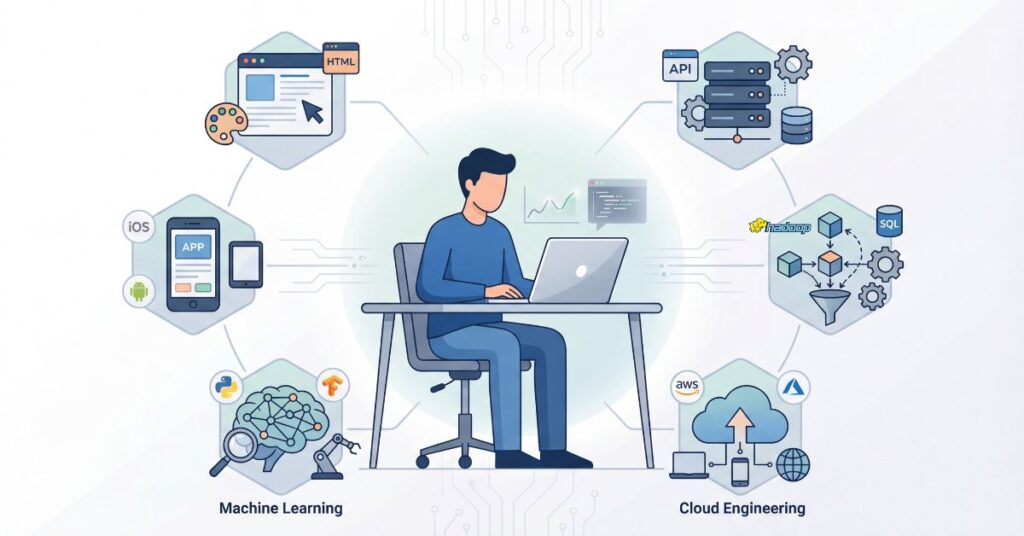
Before applying for software engineer jobs in the USA, the most important step is identifying your specific engineering domain. Software engineering is not just a job title — it’s a collection of highly specialized niches in a competitive market. Ask yourself what type of software you actually build and enjoy working on. Your niche might be web development, machine learning, data engineering, mobile applications, automation, or backend systems. Employers don’t hire “general coders”; they hire specialists who match their exact technical needs.
Defining Your Sub-Niche and Tech Stack
Within your main niche, your sub-niche is defined by your tech stack and experience level. For example, a frontend developer skilled in React has a different market position than a full-stack engineer working with the MEAN stack (MongoDB, Express, Angular, Node.js). Likewise, targeting entry level software engineer US roles requires a different resume and interview strategy than applying for senior positions. The strongest job seekers tailor their resume and job search to one focused niche rather than sending a generic profile everywhere — this clarity is what helps candidates stand out in the crowded US tech job market.
Why Resume Keyword Optimization Matters
Now compare these two resume bullets carefully.
- A generic version might say: “Developed and maintained a robust database for the application, ensuring data integrity and optimizing query performance.”
- A keyword-optimized version says: “Authored and optimized SQL queries, leveraging Entity Framework for data access in .NET and creating stored procedures, triggers, and views to efficiently manage large datasets in high-load environments.”
Both statements describe similar responsibilities. The difference is that the second bullet uses the exact technical language US recruiters and applicant tracking systems (ATS) search for. Hiring managers don’t just look for effort — they look for proof that you’ve worked with the tools and technologies listed in their job descriptions. When your resume reflects those terms naturally, it becomes far more likely to appear in searches for software engineer jobs in USA and move past recruiter screening.
Resume Format Myths Debunked
Many job seekers still believe a software engineer resume must be one page. In today’s digital hiring environment, that rule no longer applies. If you have the experience, a two-to-four-page resume is completely acceptable — as long as the content is relevant and easy to scan.
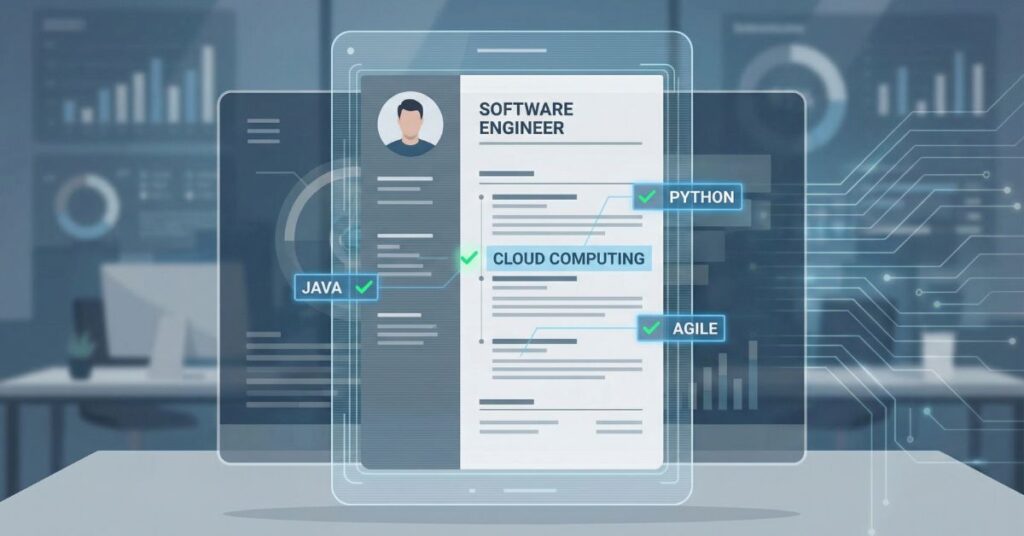
What truly matters is readability and ATS compatibility. Avoid images, graphics, tables, or unusual formatting that resume parsing systems may struggle to process. Your resume should be structured with clear section headings, concise bullet points, and enough white space to prevent visual clutter. A recruiter should be able to identify your niche and technical strengths within five seconds of opening the document. When your resume is both technically optimized and visually clear, it works for both machines and humans — which is exactly what you need to succeed in the US tech job market.
Maximizing Job Board Success: LinkedIn, Indeed, Dice, and Beyond

Stop asking which job board is best. The real strategy for landing software engineer jobs in USA is understanding that each platform serves a different purpose in the hiring ecosystem. Successful candidates use multiple job boards together to increase visibility across the tech jobs in United States market rather than relying on a single source.
Dice: The Tech Recruiter Hub
Dice remains one of the most powerful platforms specifically for software developer jobs USA, especially contract, consulting, and mid-to-senior engineering roles. Many technical recruiters in the US actively source candidates directly from Dice before jobs are even widely posted.
To maximize results:
- Complete every section of your profile
- Upload a keyword-optimized resume using software engineer resume US format
- Add every technical skill discovered in your job description research
- Keep your profile set to visible
You will likely receive frequent calls or emails from offshore recruiting firms. These recruiters often represent legitimate US clients hiring for H1B software engineer jobs and other software engineer jobs USA visa sponsorship opportunities. Staying professional, organized, and responsive with these contacts can lead to roles that never reach public job boards.
LinkedIn: The Career Accelerator
LinkedIn plays a critical role in long-term software engineering career US growth. However, the platform rewards account maturity and consistent engagement. New accounts typically receive limited visibility at first.
If you’re targeting entry level software engineer US or junior software engineer jobs USA, build activity by applying to 20–30 roles daily, engaging with posts, and updating your profile regularly. Over time, LinkedIn’s algorithm begins surfacing more relevant opportunities, including remote software engineer jobs USA.
Your LinkedIn profile should function as a searchable resume. Your headline, summary, skills, and experience sections should clearly communicate your niche (backend, frontend, full stack, data engineering, etc.) while incorporating relevant keywords like:
- backend developer skills USA
- Frontend Developer Jobs USA
- full stack developer jobs USA
Recruiters frequently search using these exact terms.
Indeed: The Volume Strategy
Indeed remains one of the largest aggregators of software engineer jobs in USA, making it highly competitive but valuable for volume applications. This platform is especially effective for candidates pursuing entry level software engineer US roles or those expanding their search across multiple industries.
To improve ranking in employer searches:
- Fully complete your profile
- Match your skills section with resume keywords
- Select all relevant skills before submitting applications
- Keep your resume updated with measurable achievements
Profiles with fully completed skill sections are more likely to appear at the top of recruiter filters.
Strategic Takeaway
Experienced engineers often see the highest return through LinkedIn due to recruiter outreach and targeted opportunities. Entry-level and international candidates frequently benefit from combining Dice’s recruiter network with Indeed’s job volume. The most effective job seekers treat visibility like marketing — the more platforms you optimize, the more opportunities you generate in the US tech hiring market.
Mastering Technical Interviews at US Companies

Securing interviews for software engineer jobs in USA is a major milestone — but this is where the real competition begins. The technical interview process at American tech companies, including FAANG and fast-growing startups, is highly structured and designed to evaluate not just coding ability, but how you think, communicate, and operate in real engineering environments. Strong software engineer interview preparation US is what separates candidates who pass from those who get filtered out.
Process Questions
US tech interviews frequently include questions about your development workflow and collaboration style. Companies want engineers who can contribute immediately within established systems. Be prepared to discuss Agile methodologies, sprint planning, code reviews, Git workflows, testing practices, and CI/CD pipelines.
These questions are not theoretical. Interviewers are assessing whether you understand modern software delivery processes and can integrate smoothly into an engineering team.
Experience Questions
Behavioral and experience-based questions are a core part of coding interview US companies processes. These typically follow the STAR method (Situation, Task, Action, Result). You should prepare structured stories that demonstrate:
- Solving complex technical problems
- Collaborating across teams
- Managing production incidents
- Resolving conflicts professionally
- Taking ownership of technical decisions
Each example should reference real technologies from your tech stack. This reinforces both your technical depth and your ability to apply knowledge in real-world situations.
Technical Skills Questions
This is the most challenging portion for many candidates and is central to data structures and algorithms interview rounds. Interviewers assess your logic, efficiency, and ability to explain your approach clearly while coding.
Expect:
- Data structure and algorithm problems (arrays, trees, graphs, dynamic programming)
- System design interview US questions for mid-to-senior roles
- Live coding exercises in your primary programming language
The key to strong FAANG interview preparation is not memorizing solutions. Interviewers focus on your thought process — how you break down problems, evaluate edge cases, communicate trade-offs, and analyze time and space complexity.
Creating Your Technical Interview Study Guide
A structured study plan is essential. Preparation should match your experience level and target roles.
For entry-level candidates:
- Focus heavily on data structures and algorithms
- Practice writing clean, readable code
- Build speed and confidence in live coding
For mid-to-senior engineers:
- Emphasize system design fundamentals
- Learn scalability patterns and trade-offs
- Prepare for architectural discussions
- Practice leadership and decision-making scenarios
Additionally, prepare five to seven career stories in advance. These should highlight different competencies, such as resolving a production outage, improving system performance, mentoring junior engineers, leading technical initiatives, or managing project setbacks.
Special Considerations for International Candidates
If you are pursuing software engineer jobs USA visa sponsorship, your job search strategy must be more targeted and structured. Employers consider immigration timelines, legal processes, and onboarding risk, which means you need to position yourself as a low-friction hire.
Focus on companies with established histories of sponsoring H1B software engineer jobs and other employment visas. Larger tech firms, enterprise software companies, and consulting organizations are more familiar with the sponsorship process. Prominently highlight any US-based education, OPT status, CPT experience, or existing work authorization on your resume to reduce uncertainty for recruiters.
Many organizations also offer remote software engineer jobs USA that allow international engineers to contribute before relocation. Demonstrating performance in a remote capacity can significantly strengthen future sponsorship opportunities.
The Path Forward: From Applications to Offers
Breaking into the US market for software developer jobs USA is a combination of volume, positioning, and continuous improvement. Competitive candidates apply to 20–30 relevant roles daily across multiple platforms, while tracking application responses, interview feedback, and outcomes in a structured system.
Rejection should be treated as data, not failure. Each declined application or interview outcome provides insight into market alignment, resume clarity, or interview readiness. Adjust your approach based on patterns rather than emotions.
The roadmap for how to get software engineer job in US is not mysterious — it is systematic:
- Identify a clear niche and tech stack
- Build a keyword-optimized resume
- Maximize visibility across job boards
- Prepare methodically for technical interviews
Your first role in the US may not be at a top-tier company, but it establishes local experience, credibility, and momentum. From there, opportunities compound.
The US tech industry continues to demand skilled engineers. With structured preparation, persistence, and strategic positioning, your expertise can find its place in the market.
Ready to accelerate your search? Start by defining your niche, updating your resume with targeted keywords, and building a daily application system today.

Founder of AlertsU, publishing detailed visa guides and global job opportunities. Focused on helping individuals navigate processes and access international career options through accurate and easy-to-understand information.
Discover more from AlertsU.Com
Subscribe to get the latest posts sent to your email.