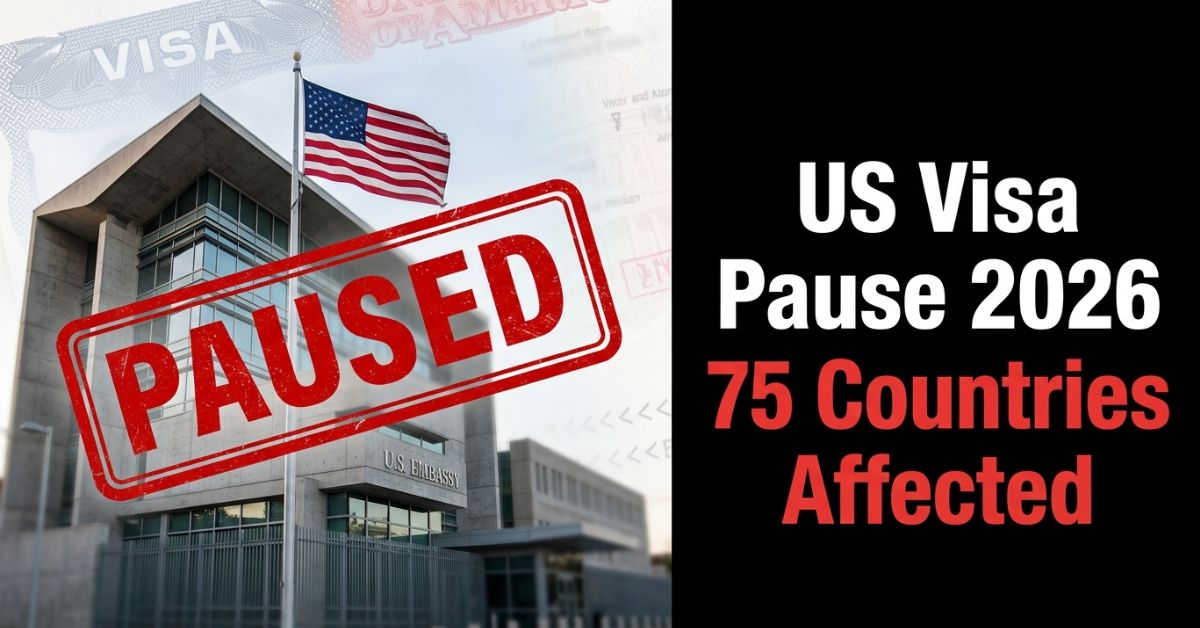
At the start of the year 2026, the landscape of American Immigration has shifted. Under the current administration, the Department of State has implemented a review of vetting policies and screening. The goal of this shift is to ensure all of the incoming immigrants have sufficient financial backup. According to the administration, new-comers must not become a burden to American taxpayers.
The issuance of immigrant visas was officially paused by the U.S. government on January 21, 2026, for nationals from a specific list of 75 countries. If you are navigating the process of the green card, understanding the new US immigrant visa rules 2026 is vital to managing the legal strategy and expectations.
The 75-Country List: Is Your Nationality Affected?
Dozens of countries has been identified by the Department of State where applicants are considered to be at risk of relying on public benefits. While this does not mean every individual from these countries is a “public charge,” the blanket pause applies to all nationals of the following countries:
Afghanistan, Albania, Algeria, Antigua and Barbuda, Armenia, Azerbaijan, Bahamas, Bangladesh, Barbados, Belarus, Belize, Bhutan, Bosnia and Herzegovina, Brazil, Burma, Cambodia, Cameroon, Cape Verde, Colombia, Cote d’Ivoire, Cuba, Democratic Republic of the Congo, Dominica, Egypt, Eritrea, Ethiopia, Fiji, The Gambia, Georgia, Ghana, Grenada, Guatemala, Guinea, Haiti, Iran, Iraq, Jamaica, Jordan, Kazakhstan, Kosovo, Kuwait, Kyrgyz Republic, Laos, Lebanon, Liberia, Libya, Moldova, Mongolia, Montenegro, Morocco, Nepal, Nicaragua, Nigeria, North Macedonia, Pakistan, Republic of the Congo, Russia, Rwanda, Saint Kitts and Nevis, Saint Lucia, Saint Vincent and the Grenadines, Senegal, Sierra Leone, Somalia, South Sudan, Sudan, Syria, Tanzania, Thailand, Togo, Tunisia, Uganda, Uruguay, Uzbekistan, and Yemen.
Note: Green Cards holders (permanent residency seekers are specifically targetted by this immigrant visa processing update 2026 through consular processing abroad.
Critical Exceptions to the Visa Pause
Applicants can still move forward while the pause is extensive, in specific case scenarios. Understanding the critical exceptions to the visa pause can be the difference between a successful entry and an indefinite wait.
1. Dual Nationals
If you are from one of the mentioned countries above and also possess a passport from a country not mentioned above, thats mean you are exempt. Dual nationals must apply using the passport of the country not available in the above countries section to bypass the pause.
2. International Adoptions
International adoptions are a major exception for the children who are adopted by United States citizens. A major exception exists for children being adopted by U.S. citizens. Under Presidential Proclamation 10998, these cases may qualify for a National Interest Exception (NIE).
The U.S. families who have adopted on the international level are encouraged to continue the normal process; these cases are prioritized to prevent the separation of families.
3. Adjustment of Status (Within the U.S.)
The latest immigration policy change of 2026 is affecting the individuals who are applying now. If you are physically present in the U.S and trying to apply for the Adjustment of Status, then you may not be subject to the same issuance pause.
Also Read: H-1B Visa 2026 Update: New Rules, Fee Increase, Changes & Extension Processing Time
Frequently Asked Questions (FAQs)
What happens to my scheduled interview?
According to the latest reports, the department is scheduling and conducting the scheduled interviews. Candidates can easily attend their interviews without any pause.
Does this affect my current, valid visa?
In the latest visa update of 2026 there is no report regarding revoking the existing immigrant visa. You should be able to travel if you already have a visa and it is valid. To make the process aligned with policies, always check the Department of Homeland Security for the latest requirements.
Does this apply to tourist or student visas?
The current pause is for only immigrant visas. No, this does not apply to tourists or students. B-1/B-2 that are tourist visas, F-1, which is a student visa, and H-1B, which is a specialty worker visa, are currently excluded from this pause.
Also Read: How to Pass a Fruit Picking Job Interview: Complete Guide for Beginners and Foreigners
Proactive Steps for Applicants in 2026
Even if your visa issuance is on hold, you can take steps to strengthen your case for when the review concludes. This is the time to focus on demonstrating financial self-sufficiency.
- Gather Financial Evidence: Prepare robust documentation, including bank statements, investment portfolios, and proof of assets.
- Affidavits of Support: Ensure your petitioner’s Form I-864 is comprehensive and backed by solid tax returns.
- Monitor Legal Challenges: Lawsuits are already being filed to challenge the legality of nationality-based pauses. Staying informed on these court cases can provide a timeline for potential policy reversals.
Summary of Impact
| Visa Category | Status | Exception Available |
| Immigrant Visas (Consular) | Paused | Dual Nationals, Adoptions |
| Adjustment of Status (USCIS) | Processing | Yes |
| Tourist/Business (B1/B2) | Active | N/A |
| Student Visas (F/M/J) | Active | N/A |
A layer of complexities for the thousands of families has been added. The green card processing update 2026 is the reason of added layer. While the review of the public charge is contniued and, the best strategy is to keep all required documents ready. Keep an eye on the updates and consult a legal counsel to explore possible entry avenues.

Discover more from AlertsU.Com
Subscribe to get the latest posts sent to your email.